
Specifying the wrong boiler panel on a hydronic heating project in Vancouver BC can cost a contractor weeks of rework, failed inspections, and strained client relationships. The Lower Mainland’s mix of high-rise residential towers, commercial retrofits, and heritage buildings makes panel selection genuinely complex. Get the specification right before the equipment ships and the rest of the install runs far more smoothly.
- Why Panel Choice Matters in Hydronic Systems
- Pre-Built vs. Custom Panels: Choosing the Right Fit
- Sizing and Zoning Considerations for Vancouver Projects
- BC Code and Inspection Requirements
- Working With a Hydronic Panel Supplier
- Frequently Asked Questions
Why Panel Choice Matters in Hydronic Systems
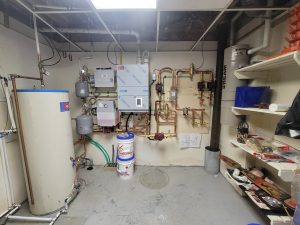
A boiler panel is the nerve centre of any hydronic heating system. It houses the circulators, mixing valves, expansion tanks, air separators, and controls that keep water moving at the right temperature through every zone. Choose a panel that is undersized, poorly laid out, or built to the wrong configuration and you introduce pressure imbalances, inefficient heat transfer, and control headaches that are difficult to diagnose after the drywall goes up.
Vancouver’s climate sits in a mild, wet band compared to Alberta or Manitoba, but that does not mean heating loads are trivial. Commercial buildings and multi-unit residential towers still demand precise flow rates and reliable zone control across many circuits. A panel that works fine in a single-family application will fall short the moment you scale up to a 20-zone commercial floor.
The panel specification also affects commissioning time. A well-organised panel with clearly labelled circuits, accessible isolation valves, and pre-wired controls cuts commissioning hours significantly. That time saving shows up directly in project margin, which is why experienced mechanical contractors treat the panel spec as a priority decision, not an afterthought.
Pre-Built vs. Custom Panels: Choosing the Right Fit
The first fork in the road is deciding between a pre built boiler panel and a fully engineered custom build. Pre-built panels are assembled to a proven configuration, pressure-tested, and ready to connect. They work well when the project’s zone count, flow rates, and boiler staging align with a standard template. For contractors running tight schedules on multi-unit residential builds in Vancouver, a pre-built panel can shave days off the mechanical rough-in.
Custom boiler panels are the right answer when the building’s load profile, mechanical room geometry, or control sequence falls outside what a standard product can handle. A heritage office conversion with an unusual primary-secondary loop arrangement, or a mixed-use tower with separate domestic hot water integration, will typically need a panel designed from scratch around those specific conditions.
The decision is rarely obvious on paper. Talk through the heat loss calculations, the number of independently controlled zones, and the control system the engineer has specified before you commit to either path. Ordering the wrong category of panel and realising it on delivery day is an expensive mistake to correct on a Vancouver job site where mechanical room access is often restricted.
Sizing and Zoning Considerations for Vancouver Projects
Panel sizing follows the heat loss calculation: the building’s room-by-room load and chosen temperature drop set each zone’s design flow rate, and the circulator for that zone is then matched to both that flow and the circuit’s head loss. Each zone circuit needs a dedicated circulator or branch off a primary manifold, sized to deliver the correct flow at the available pump head. Under-sizing a circulator means a zone never reaches design temperature. Over-sizing it wastes energy and can cause noise and velocity erosion in the piping.
Vancouver’s building stock includes a high proportion of concrete high-rises where radiant floor heating is common, particularly in residential units. Radiant systems run at low supply temperatures, typically 40 to 55 degrees Celsius, and require mixing stations or injection loops to step down from the boiler’s primary loop. Your panel specification needs to account for those mixing components explicitly, not leave them as field-assembled add-ons.
For projects with pre-built pump boards already specified by the engineer, confirm that the board’s circulator selections match the actual zone lengths and pipe diameters in the drawings. It is common for pump board selections to be based on preliminary layouts that change during design development. Catching the mismatch before fabrication is always cheaper than modifying a completed board in the field.
BC Code and Inspection Requirements
Hydronic heating systems in Vancouver BC are governed by the BC Plumbing Code and the BC Building Code, with oversight from local authorities having jurisdiction. Boiler installations also fall under the provincial safety authority, which licenses boiler and pressure vessel contractors and requires installation permits, with operating permits and inspections for certain regulated equipment. Contractors must confirm which permits and registrations apply to the specific boiler being installed and whether the panel assembly itself carries any pressure vessel classification.
Factory-built boiler panels should come with documentation confirming the components are rated for the operating pressures and temperatures in the design. Keep that documentation on site for the inspector. A panel that arrives without traceable certifications for its pressure relief valves, expansion tanks, and circulators will slow the inspection process and may require component replacement before sign-off.
Energy efficiency requirements under BC’s Step Code and related regulations are also relevant. High-efficiency condensing boilers, which are common in Vancouver new construction, require panel configurations that support low return water temperatures. If the panel is not designed to maintain return temperatures below the condensing threshold, the boiler cannot operate in condensing mode and the energy performance the building was permitted on will not materialise in practice.
Working With a Hydronic Panel Supplier
A capable supplier does more than ship a panel. They should review your design drawings, flag mismatches between the specified components and the actual system requirements, and confirm lead times against your project schedule. For hydronic heating in Vancouver, where mechanical rooms in high-rise buildings can have strict dimensional constraints, a supplier who asks for mechanical room dimensions before fabricating the panel frame saves everyone a difficult conversation on delivery day.
Ask the supplier about factory testing. A panel that has been pressure-tested and functionally checked before it leaves the shop arrives on site ready to connect rather than ready to troubleshoot. Factory testing also catches wiring errors in pre-wired control panels, which are far easier to correct at the shop than above a suspended ceiling in a Vancouver tower.
Lead times matter on busy Metro Vancouver projects. Pre-built panels typically ship faster than custom builds, but custom panels can sometimes be expedited if the scope is well-defined early. Get your panel specification into the supplier’s hands as soon as the mechanical drawings are issued for tender, not after the contract is awarded. That window is usually where schedule risk is created or avoided. You can also compare approaches used in other western Canadian markets, such as the custom panel decisions outlined for custom boiler panels in Edmonton, to sharpen your specification criteria.
Ready to get your panel specification right before the project breaks ground? Reach out to our Vancouver team or visit our boiler panels Vancouver page to review pre-built options sized for commercial installs. We can review your drawings, confirm panel configurations, and get equipment moving on a timeline that works for your schedule. Contact Evolve Hydronics to start the conversation.
Frequently Asked Questions
What is a boiler panel in a hydronic heating system?
A boiler panel is a pre-assembled mechanical assembly that contains the circulators, valves, controls, and safety components needed to distribute hot water from the boiler to the building’s heating zones. It centralises the system’s key components in one location, making installation, commissioning, and future servicing much more straightforward than field-assembled piping arrangements.
When should I specify a custom panel instead of a pre-built one?
Specify a custom panel when the project’s zone count, flow rates, control sequence, or mechanical room dimensions fall outside what standard pre-built configurations cover. Projects with unusual primary-secondary loop arrangements, integrated domestic hot water, or tight mechanical room clearances are common candidates. Pre-built panels are the faster and more cost-effective choice when the system design aligns with a proven standard layout.
How does BC code affect boiler panel specifications in Vancouver?
BC code requires that boiler installations comply with the BC Building Code and its plumbing provisions, plus the permitting and contractor-licensing requirements administered by the provincial safety authority, though a number of Lower Mainland municipalities issue their own gas and electrical permits, so confirm whose jurisdiction your project falls under. On our panels we size pressure relief valves, expansion tanks, and circulators for the design conditions of the system, and we keep the component documentation on hand so the inspector can see what was installed. Energy efficiency requirements tied to BC’s Step Code also influence return water temperature design, which affects how the panel is configured.
What lead times should I plan for when ordering a boiler panel in Vancouver?
Lead times vary by panel type and supplier, but pre-built panels generally ship faster than custom builds. Pre-built options may be available within a few weeks, while custom panels can take four to eight weeks or more depending on complexity and the supplier’s current workload. Get your specification to the supplier as early as possible in the project timeline, ideally when mechanical drawings are issued for tender, to avoid schedule risk.
Does a high-efficiency condensing boiler require a specific panel configuration?
Yes. Condensing boilers need return water temperatures below approximately 55 degrees Celsius to operate in condensing mode and achieve their rated efficiency. The panel must include mixing stations or injection loops that maintain those low return temperatures, particularly in systems that also serve higher-temperature emitters. A panel designed for a conventional boiler without this consideration will prevent the condensing boiler from operating efficiently and may void manufacturer warranties.
Can Evolve Hydronics supply panels for projects outside Vancouver?
Yes. We supply hydronic heating panels and support contractors across western Canada, including Calgary, Edmonton, and Winnipeg. Each market has its own climate loads and code considerations, and we factor those in during the specification review. Visit our hydronic heating Calgary or hydronic heating Winnipeg pages for region-specific information, or contact us directly to discuss your project.