
Winnipeg’s heating season does not ease in gradually. When temperatures drop, building owners expect heat, and mechanical contractors need every advantage they can find to finish on time. Boiler panels that arrive on site pre-assembled, wired, and pressure-tested can be the difference between a commissioning call in October and a frantic callback in December. Here is what contractors and building owners in Winnipeg should know before the next project goes to tender.
- Why Pre-Built Panels Suit Winnipeg Projects
- What a Pre-Built Boiler Panel Includes
- Timing Your Order Before the Winter Rush
- Permits and Code Considerations in Winnipeg
- When a Custom Panel Is the Better Call
- Frequently Asked Questions
Why Pre-Built Panels Suit Winnipeg Projects
Winnipeg sits in one of Canada’s most demanding heating climates. ASHRAE climatic data places the city’s 99.6 percent heating design temperature at approximately minus 31 degrees Celsius, which means hydronic systems must be sized and installed to perform at true extremes. That pressure makes schedule compression a real risk on any fall project.
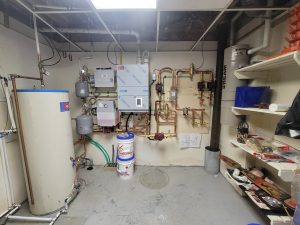
Pre-built boiler panels shift the bulk of the assembly work from a congested mechanical room to a controlled shop environment. Pipework is cut, fitted, and tested before the panel ships. On site, the crew connects supply and return headers, makes electrical terminations, and moves to commissioning rather than spending days fabricating from raw components. That compression matters when a general contractor is counting down to occupancy.
For multi-unit residential buildings, schools, and commercial projects common across Winnipeg, reducing time inside the mechanical room also reduces conflict with other trades. A panel that lands ready to connect lets the plumber, electrician, and controls technician work in a logical sequence rather than circling each other.
What a Pre-Built Boiler Panel Includes
A well-specified boiler panel arrives as a complete assembly rather than a collection of loose components. At a minimum, expect a structural frame carrying the primary and secondary circuit pipework, isolation valves, circulators, expansion tank connection points, pressure and temperature gauges, and a mixing valve or variable-speed drive arrangement sized to the system’s load. Wiring for circulators and controls is typically terminated to a panel-mounted enclosure so field electrical work is limited to final connections.
Quality fabricators pressure-test the assembly and document it before shipping. That step catches leaks and assembly errors in the shop, where corrections are straightforward, rather than on site, where a pressure failure can delay commissioning by days. Ask your supplier for a copy of the test report before accepting delivery.
Panels designed for hydronic heating in Winnipeg should be built to CSA B214, the installation code for hydronic heating systems. CSA B51 governs the pressure vessel side. Confirming that your supplier designs to these standards before fabrication begins avoids costly rework when the authority having jurisdiction reviews the installation.
Timing Your Order Before the Winter Rush
Fabrication lead times lengthen every year as fall approaches. Mechanical contractors across the prairies are all trying to get heating systems commissioned before November, and panel suppliers feel that demand in August and September. Placing your order in early summer gives the fabricator time to source components, build to your specification, and ship without expediting fees.
The spec review is the step most contractors underestimate. A panel sized to the wrong flow rate or designed around a boiler model that has since been substituted needs to be rebuilt, and that rebuilding eats lead time. Locking in the boiler selection, zone count, and design flow before releasing the panel order prevents that problem. Our team works through those details with you at the quoting stage so fabrication can start on a confirmed specification.
If you are working on an Edmonton project with similar timing pressure, our post on why pre-built boiler panels are the smarter choice covers the general planning case in more detail.
Permits and Code Considerations in Winnipeg
Mechanical work involving boilers and pressure piping in Manitoba is regulated at the provincial level under legislation that includes the Steam and Pressure Plants Act and references CSA B51. Work on gas-fired boilers also requires a licensed gas fitter under The Gas and Oil Burner Act. The practical result is that several permits and inspections are typically involved in a commercial boiler installation, and the requirements are confirmed for each project before work starts.
Manitoba’s building and plumbing codes also require that piping be protected from freezing, which is a real concern during a Winnipeg winter installation where a building may not yet be fully enclosed. Planning the sequence of work so that the hydronic system is pressurized and protected before exterior work is complete is part of responsible project management in this climate.
When we supply a panel for a Winnipeg project, we share the relevant specification documents with the contractor’s team so the authority having jurisdiction has what it needs for the permit application. We confirm the specific permit stream that applies to your project at the time of order, because requirements can vary by scope and equipment classification.
When a Custom Panel Is the Better Call
Pre-built boiler panels suit the majority of commercial and multi-unit residential projects, but some buildings need something designed from scratch. A high-rise with a district energy interface, a facility with six or more zones running different supply temperatures, or a retrofit where the mechanical room dictates an unusual panel footprint may not fit a standard configuration.
In those cases, custom boiler panels are the right answer. Our post on custom boiler panels in Winnipeg covers the situations where a stock panel falls short and what the design process looks like. The short version is that the additional engineering time is offset by a panel that integrates cleanly with the system instead of requiring field modifications that cost more than the engineering would have.
If you are not sure which path fits your project, bring us in early. A short conversation about zone count, design temperatures, boiler selection, and room constraints is usually enough to point the project in the right direction. We also supply pre-built pump boards for secondary distribution where the boiler panel and pump station are specified separately.
Contact Evolve Hydronics now to discuss your Winnipeg project. Whether you need a panel shipped in six weeks or are planning a complex building that calls for a fully engineered assembly, we can help you specify the right solution and get your order into the fabrication schedule before the fall rush closes the window. Reach out through our contact page and we will follow up to review your project details.
Frequently Asked Questions
What is a pre-built boiler panel and how does it differ from site-built pipework?
A pre-built boiler panel is a factory-assembled frame that carries the circulators, valves, gauges, and primary pipework for a hydronic heating system, arriving on site ready to connect to the boiler and distribution headers. Site-built pipework is fabricated in the mechanical room from individual components, which takes more labor hours and introduces more opportunity for field errors. The panel is pressure-tested at the shop before shipping, so the on-site commissioning process is faster and more predictable.
How far in advance should I order a pre-built boiler panel for a Winnipeg project?
Ordering in early summer gives you the most flexibility. Fabrication demand across the prairies peaks in August and September as contractors race to commission heating systems before winter, and lead times lengthen as that window fills. Early orders also leave time to revise the specification if the boiler selection or zone count changes before fabrication starts, without compressing the delivery schedule.
What standards apply to boiler panel installations in Manitoba?
CSA B214 is the installation code for hydronic heating systems and CSA B51 governs boilers and pressure vessels and pressure piping. Work on gas-fired equipment is regulated under The Gas and Oil Burner Act and requires a licensed gas fitter. The specific permits required depend on the scope and equipment classification, and we confirm those requirements with the contractor’s team before the project starts rather than assuming a single path applies to every job.
Can a pre-built boiler panel be used on a multi-zone commercial building?
Yes, pre-built panels are regularly specified for multi-zone commercial buildings. The panel is sized to the system’s total design flow rate and can include manifold connections for multiple zones. The key is locking in the zone count, flow rates, and supply temperatures before fabrication begins so the panel is built to the correct specification. Projects with six or more zones running different supply temperatures, or buildings with unusual room constraints, may be better served by a custom panel designed from scratch.
Does Evolve Hydronics supply panels for projects outside Winnipeg?
Yes. We supply pre-built and custom boiler panels to projects across the prairies and beyond, including Calgary and Edmonton. Our hydronic heating Calgary page and our posts on boiler boards in Winnipeg cover regional considerations in more detail. Contact us with your project location and we will confirm what we can supply and what lead times look like for your schedule.