A hydronic heating installation can stall for days while a technician wires controls, mounts circulators, and traces faults in a field-assembled panel. Pre-built pump boards solve that problem by arriving on site already assembled, tested, and ready to connect. For contractors and building owners in Calgary, where mechanical rooms are often tight and project schedules tighter, the difference between a factory-built board and a field-built one is frequently measured in billable hours rather than minutes.
- What Is a Pre-Built Pump Board?
- Why Pump Boards Save Time on Calgary Hydronic Installs
- Pre-Built Pump Boards vs. Custom Boiler Panels: Choosing the Right Fit
- What Goes Into a Well-Specified Pump Board
- Permits, Code, and Pressure-Equipment Rules in Calgary
- Working With Evolve Hydronics on Your Next Project
- Frequently Asked Questions
What Is a Pre-Built Pump Board?
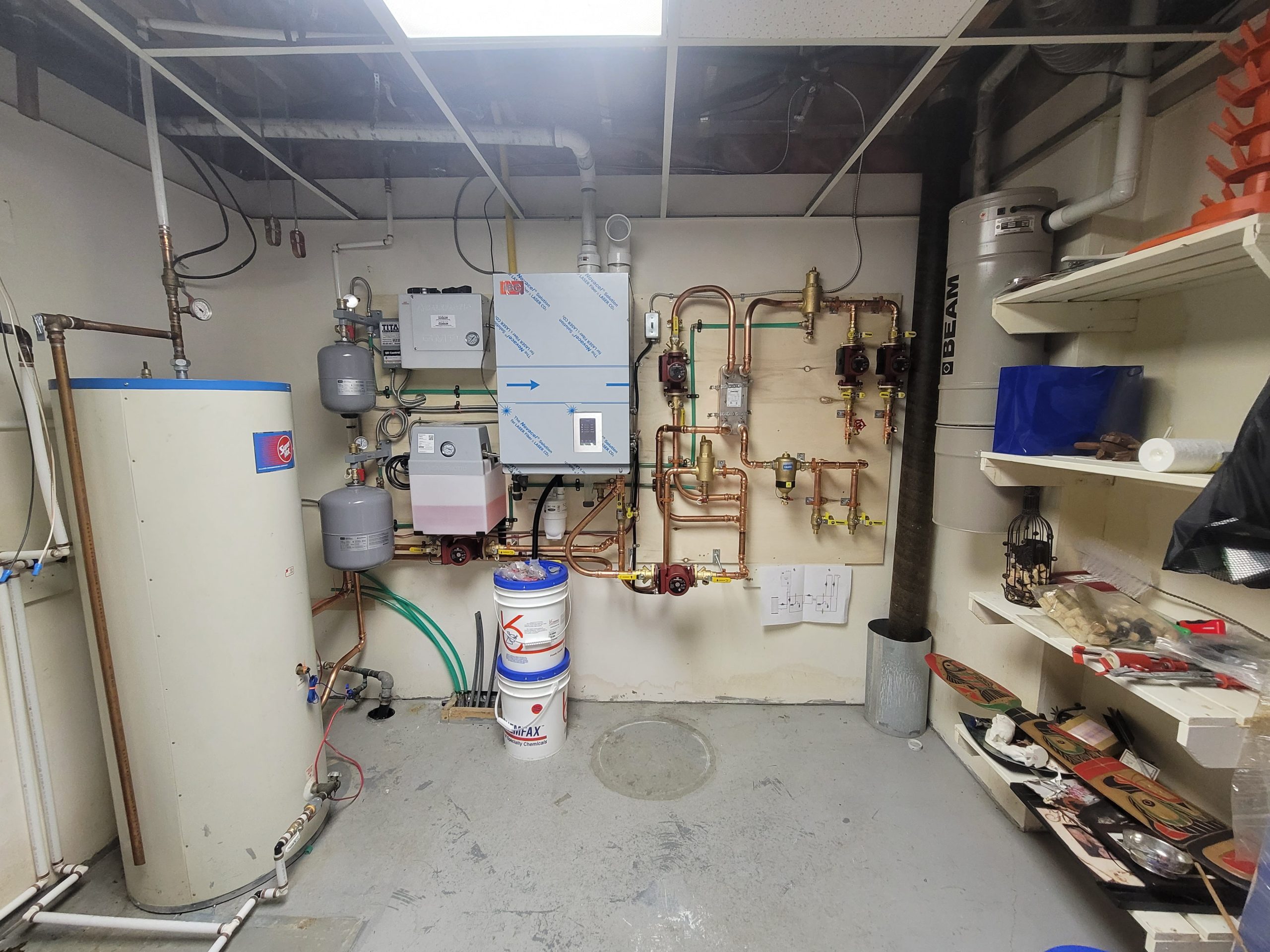
A pre-built pump board is a factory-assembled mechanical sub-assembly that houses the circulators, valves, headers, and associated controls needed to move heated water through a hydronic system. Instead of sourcing each component separately and assembling them in the field, the installer receives a single, tested unit that drops into the mechanical room. Our pre-built pump boards are built to a defined specification before they leave our shop, which means every connection point is in the right place and every component has already been pressure-checked.
The distinction matters because pump boards sit at the heart of any multi-zone hydronic system. They distribute flow to radiant floors, fan coils, or heat exchangers, and any assembly error there creates problems that ripple through every zone. Building the board in a controlled environment, rather than on a ladder in a cramped utility room, dramatically reduces the chance of a wiring reversal or a mis-torqued fitting making it past commissioning.
Why Pump Boards Save Time on Calgary Hydronic Installs
Calgary projects face scheduling pressure from two directions: short construction windows driven by weather, and mechanical rooms that often have to be roughed in before the rest of the building catches up. A pre-built board compresses the field-labour portion of the work because the assembler is working on a bench with full access, not reaching around existing piping. For anyone managing a hydronic heating project in Calgary, that reduction in on-site hours translates directly into a tighter handover date.
There is also a quality argument. When a pump board is assembled once, by the same hands, to the same drawing every time, troubleshooting becomes straightforward. The controls layout is familiar, the wiring follows a known schematic, and any fault found during commissioning has a shorter list of probable causes. Contrast that with a field-built assembly where each installer makes slightly different decisions about component placement and wire routing, and the efficiency advantage of the pre-built approach becomes clear.
We have seen this play out repeatedly on commercial and multi-residential projects across Alberta. The hours saved in the mechanical room on a single job often offset the planning time required to specify the board correctly up front, which is why we encourage contractors to loop us in early rather than after the rough-in is already done.
Pre-Built Pump Boards vs. Custom Boiler Panels: Choosing the Right Fit
Not every project calls for the same solution. Our pre-built boiler panels suit projects where the zone count, flow rates, and control logic fall within a defined range, and the schedule favours a shorter lead time. A pre-built pump board within that family works well for a developer building the same mechanical room across multiple units, or a contractor who runs similar commercial radiant jobs repeatedly.
When the system is genuinely one-of-a-kind, a custom boiler panel is the better path. Custom work makes sense when the zone configuration is unusual, when the control integration is complex, or when the mechanical room layout demands a form factor that a standard board cannot match. The honest answer is that the right choice depends on the heat-loss calculation, the zone layout, and the sequence of controls, and we walk through those drivers with every project before recommending a direction. You can also see how these considerations play out in larger commercial contexts in our post on specifying pre-built vs. custom panels in Calgary.
What Goes Into a Well-Specified Pump Board
A pump board is only as reliable as its weakest component, and specification decisions made at the design stage determine how the system performs for years. At minimum, a well-specified board includes correctly sized circulators matched to the design flow rate, isolation valves on each pump to allow service without draining the system, a supply and return header sized to the number of zones, balancing valves where the circuit lengths vary, and a control enclosure with clearly labelled terminals. CSA B214, the installation code for hydronic heating systems, sets the framework within which these components must operate, and our assemblies are built to meet it.
Pressure relief and air elimination are equally important. A board that ships without an air separator or adequate expansion accommodation is going to generate callbacks, regardless of how clean the rest of the installation looks. We treat those as standard inclusions rather than options because the cost of a callback call-out far exceeds the cost of the components. For projects that involve a pressure vessel or boiler on the same piping circuit, CSA B51 also applies to the pressure piping design, and ABSA in Alberta is the authority that oversees regulated pressure equipment.
Permits, Code, and Pressure-Equipment Rules in Calgary
Hydronic work in Calgary typically involves more than one permit stream. A gas-fired boiler requires a gas permit and a licensed gasfitter. The plumbing connections require a licensed plumber. Electrical connections to controls and circulators require an electrical permit pulled by a licensed electrician. These are the permit categories the City of Calgary applies to boiler and mechanical work, and they run in parallel rather than in sequence, which is one reason projects benefit from coordination early. We review which permits apply to the specific scope of each project before any work begins, because the answer can shift depending on whether the system is a new installation, a replacement, or an alteration to existing piping.
On the pressure-equipment side, ABSA administers Alberta’s boiler and pressure vessel safety program. Whether a specific piece of equipment falls under ABSA registration depends on its operating pressure and heating surface, and we look at those thresholds for each project rather than assuming a blanket rule applies. CSA B214 governs the installation side, and CSA B51 covers the pressure piping and vessel design. If you are working on a similar project in another province, the regulatory body changes: Technical Safety BC handles pressure equipment in British Columbia, and the permit and inspection process works differently there. Our hydronic heating service page has more on how we approach code compliance across the regions we serve.
Working With Evolve Hydronics on Your Next Project
We build pump boards for contractors, mechanical engineers, and building owners across Calgary and beyond. The process starts with the system design, specifically the zone count, design flow rates, supply water temperature, and control requirements. From there we produce a board layout for review before anything is fabricated, which gives the installing contractor a chance to confirm that the connection points line up with the rough-in before the board ships. That review step is where most coordination problems get caught, and it costs nothing compared to a field modification after delivery.
We also support projects in Edmonton and Vancouver, and our boiler repair teams in those markets work alongside the panel side of the business. If an existing system needs a pump board replacement or an upgrade as part of a larger boiler repair in Calgary, we can assess the existing piping layout and build a board that fits the space rather than forcing the piping to fit the board. That kind of coordination between the repair side and the fabrication side is something a panel-only supplier cannot easily offer.
Contact Evolve Hydronics to discuss your next pump board project. Whether you are in early design or already pulling permits, we can help you spec the right solution, confirm the lead time, and get the board to site when your schedule needs it. Reach out through our contact page or call us directly, and we will get the right person on your project straight away.
Frequently Asked Questions
What is the difference between a pump board and a boiler panel?
A pump board focuses on the fluid-distribution side of the system: circulators, headers, valves, and the controls that manage flow through each zone. A boiler panel is broader and typically includes the boiler controls, safety interlocks, and sequencing logic in addition to the distribution components. Some projects use both; others integrate everything into a single enclosure. We assess the scope of each system and recommend the configuration that makes the most sense for the design.
Do pre-built pump boards work for residential radiant floor systems?
Yes, pre-built pump boards suit residential radiant systems, particularly where multiple zones are involved or where the project is part of a multi-unit development with a repeating mechanical layout. For a straightforward single-zone residential install, a full board may be more than the project needs, and we will say so. For anything with three or more zones, the pre-built approach almost always saves labour and reduces commissioning time on site.
What permits are needed for a pump board installation in Calgary?
In Calgary, hydronic mechanical work generally involves a gas permit for any gas-fired heat source, a plumbing permit for the piping connections, and an electrical permit for the controls and circulator wiring. The City of Calgary administers these permit streams, and each one requires a licensed trade in the relevant discipline. The exact permits that apply depend on whether the work is a new installation or an alteration, and we sort through that before a job starts rather than assuming a standard answer covers every situation.
Does ABSA need to be involved in a pump board project?
ABSA’s involvement depends on the equipment connected to the pump board. ABSA administers Alberta’s boiler and pressure vessel safety program, and whether a specific boiler or pressure vessel triggers their registration and inspection process depends on its operating pressure and heating surface area. We check those thresholds against the equipment specs for each project before we finalize the board design, because the answer affects how the piping and pressure relief must be configured.
Can Evolve Hydronics supply a pump board for a project outside Calgary?
Yes. We supply boards for projects in Edmonton, Vancouver, Winnipeg, and other markets. The fabrication process is the same regardless of where the board ships, but the permit and code requirements vary by province and city. In British Columbia, for example, Technical Safety BC oversees pressure equipment rather than ABSA, and the permit structure at the City of Vancouver level differs from Calgary’s. We confirm the applicable rules for each project’s location before the board is specified, so the installation team is not surprised by a requirement they did not plan for.
What information do you need to quote a pump board?
The most useful starting point is the system’s heat-loss calculation or design load, the number of zones and their individual flow rates, the supply and return water temperatures, and the type of terminal units the system feeds, whether radiant floor, fan coils, radiators, or a combination. A mechanical drawing of the room helps us confirm that the board’s footprint and connection points will fit the space. If you are still in early design, we can work from preliminary numbers and refine the spec as the design develops.