Hydronic Heating in Vancouver Built Around Your Home and Climate
Vancouver’s wet, mild winters create a specific case for radiant heat. Forced-air systems struggle with the humidity and uneven temperatures common in older homes and multi-unit buildings here. Hydronic heating in Vancouver solves this by delivering steady, floor-level warmth through hot water circulated in pipes, with no dry air, no dust, and no cold spots. Whether you own a character home in East Van, a newer townhouse, or a commercial building on the North Shore, our CIPH-certified team designs and installs systems matched to your property.
We work on residential retrofits, new construction, and commercial projects. If a boiler on your existing system needs attention, our team also handles boiler repair in Vancouver, so you are never handed off to a stranger mid-project.
Projects We Handle in Vancouver Homes and Buildings

We install radiant floor heating in concrete slabs and wood-framed floors, retrofit baseboard systems to modern controls, and design multi-zone setups for buildings with varied occupancy schedules. Vancouver’s construction mix, from heritage Craftsman houses to steel-frame condos, means no two projects are identical.
Our CIPH-certified designers specify every component to match your building type, fuel source, and zone count. Learn more about our approach on our hydronic heating service page or explore completed work in our project gallery.
Request a Free On-Site Estimate
Hydronic Systems for Every Vancouver Property Type
Radiant floor heating works differently across property types. A concrete slab in a new build allows for embedded tubing with excellent thermal mass. A wood-framed floor in a heritage home requires a different approach, typically thin-plate aluminum diffusers installed beneath the subfloor. Each method has distinct flow rate and temperature requirements, and using the wrong one results in poor comfort and wasted energy.
Baseboard and radiator systems operate at higher water temperatures with tighter flow margins, while in-floor systems run cooler and require higher volume. Commercial and multi-unit buildings add zone count, pressure complexity, and building code requirements specific to Vancouver. We match the system design to the property, not the other way around.


What Makes a Well-Designed Hydronic System Perform
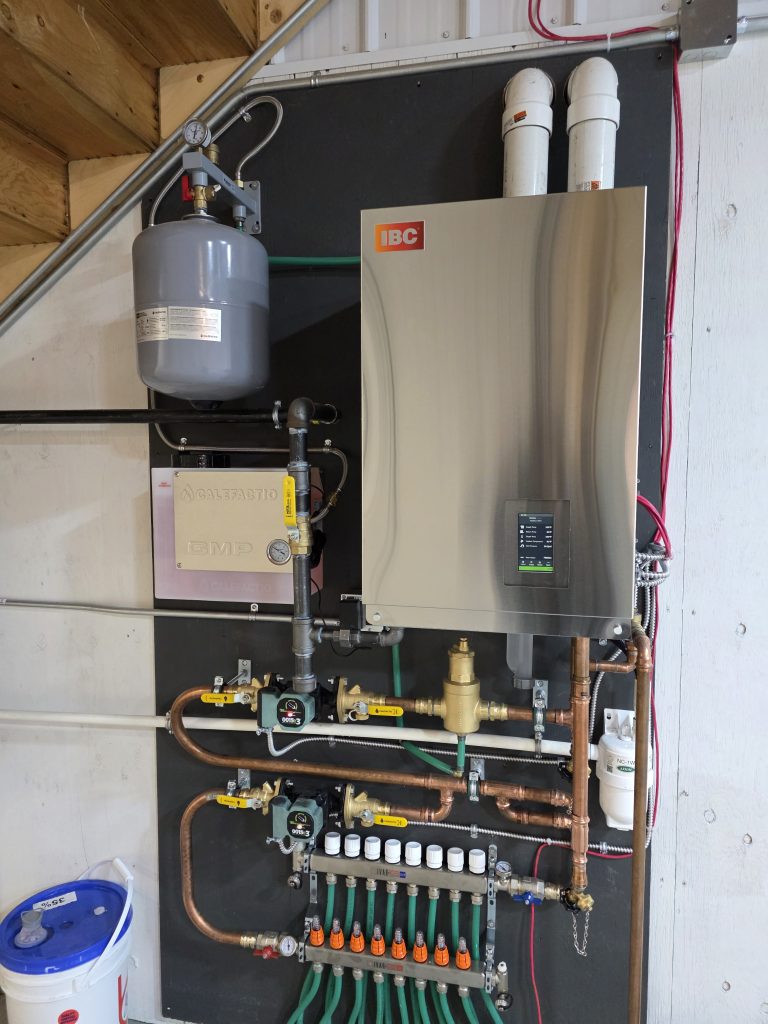
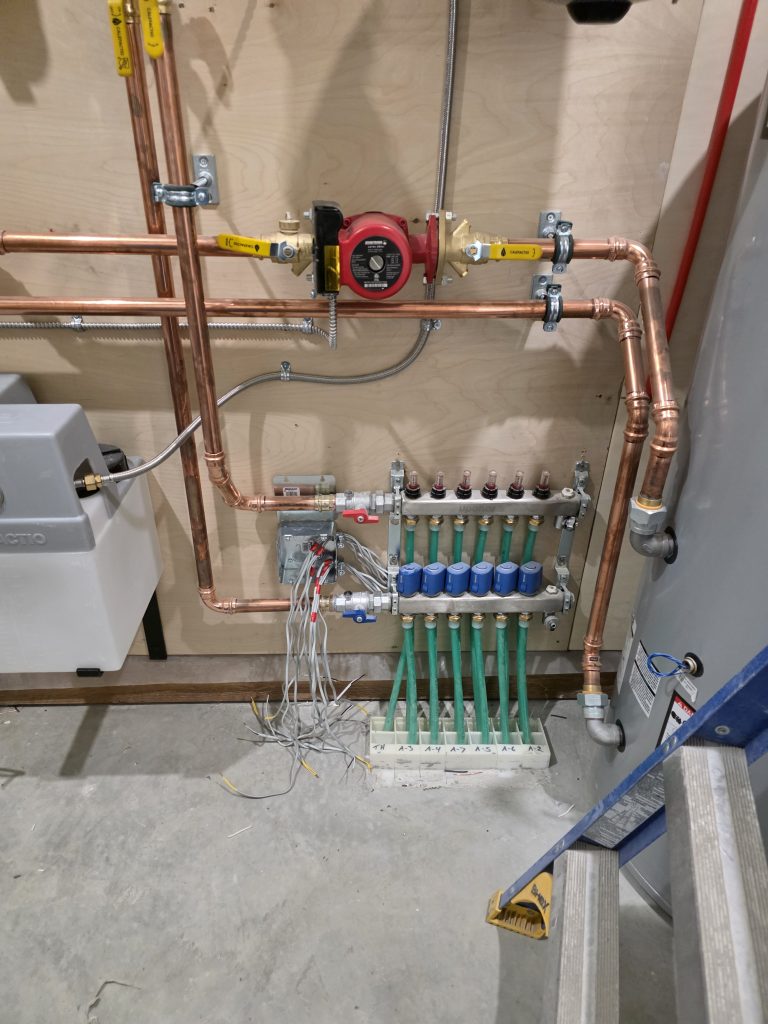
System performance comes down to accurate design decisions made before installation. Pump selection, pipe sizing, zone layout, and control strategy all affect how efficiently the system runs day to day. We evaluate your property’s heat loss, your fuel source, and your comfort goals before specifying any component. The result is a system that delivers even heat without excessive cycling or energy waste.
Hydronic Heating Vancouver FAQs
Variable-speed circulators adjust output to match actual zone demand in real time. In a Vancouver home where some zones run continuously and others only during occupied hours, this reduces electrical consumption, lowers operating noise, and cuts mechanical wear compared to fixed-speed units running at full output all day.
Correct Flow Rates
Under-pumped zones run cold. Over-pumped loops waste energy and create noise. We calculate the target flow rate for each circuit and select pump curves that hit those numbers at the operating head pressure your system actually produces. This precision matters most in multi-zone installs where one circuit can starve another.
Pre-Tested Assembly
Field-assembled distribution components introduce wiring and connection errors that slow commissioning and add cost. Our assemblies arrive bench-tested and ready to pipe in, reducing installation time on site and lowering the risk of startup issues your plumber or mechanical contractor has to troubleshoot after the fact.
Air and Dirt Separation
Air pockets and debris damage impellers and restrict flow. Systems configured with integrated separation components protect the circulator and keep the loop clean. This extends equipment life, maintains consistent heat delivery to every zone, and reduces the service calls that come from a dirty or air-bound system over time.
Multi-Zone Capability
Independent zones let you heat occupied areas of your home or building without running the full system. This is especially useful in Vancouver’s shoulder seasons, when the ground floor needs warmth but upper levels are comfortable without heat. We configure each zone for its actual flow requirement so circuits do not rob pressure from each other.
Durable Components
Pumps, valves, and fittings are selected for long-term durability in demanding hydronic environments. Quality materials mean fewer service interruptions, lower maintenance costs over the system’s life, and a more reliable heating experience for every occupant in the building.
Why Vancouver Property Owners Choose Evolve Hydronics
We start every project with an on-site assessment, not a phone quote. Vancouver’s building stock varies enormously, and a system sized for a 1960s bungalow in Burnaby will look nothing like one designed for a modern strata unit. We evaluate your existing heat source, your floor construction, your zone requirements, and your fuel availability before recommending anything.
Our team has hands-on experience with the full range of scenarios common in this region: converting electric baseboard systems to hydronic radiant, adding in-floor heat to additions and renovations, and designing full hydronic systems for commercial builds. Visit our about us page to see what drives how we work, and check our blog for project insights and seasonal tips.
Radiant Floor and Baseboard Installs: Common Scenarios We See
The most frequent residential request we get is in-floor radiant heat added to a bathroom or kitchen renovation. The second most common is a full home retrofit, replacing electric baseboard with a condensing boiler and radiant loops throughout the main living areas. Both are well within our standard scope, and both perform exceptionally well in Vancouver’s climate.
Multi-Zone and Commercial System Design
Commercial buildings and multi-unit residential properties have more complex requirements: larger zone counts, higher pressure ratings, and integration with building automation systems. We design distribution assemblies and control strategies that let individual suites or commercial tenants manage their own zones without affecting neighbouring spaces.
Explore our pre-built pump boards and custom boiler panels for the distribution hardware we typically pair with these installs.
CIPH-Certified, Tested Builds
Every system we design is reviewed by a CIPH-certified technician before installation begins. Components are pre-assembled and tested in a controlled environment where possible, reducing on-site labour time and the chance of commissioning issues. Your install goes faster, and the finished system performs from day one.
Get a Free On-Site Estimate in Vancouver
Ready to move forward? Call our local team today and we will schedule an on-site visit to assess your property and put together a free, no-obligation estimate. We size every system to your actual building, not a generic template. One zone or twelve, we want to hear about your project. Reach us through our contact page.
Reliable Local Supply
We maintain stock on common components and work with supplier networks that support fast turnaround. Vancouver project timelines are tight, and trades should never be sitting idle waiting on parts. We manage the supply side so your installation stays on schedule from first pipe to final commissioning.
Project-Proven Experience
Our recommendations come from installs we have actually completed, including radiant retrofits in older Vancouver homes, new construction systems in multi-unit buildings, and commercial projects with complex zone and pressure requirements. That hands-on experience tells us what holds up under load, what pairs well with Vancouver’s common building types, and what to avoid on complex projects where the details really matter.
Hydronic Heating Vancouver: Frequently Asked Questions
What is a pump board and how is it different from a boiler board?
A pump board includes everything in one of our boiler boards — the pumps, controls, distribution components, and wiring — except the boiler itself. It’s the right solution when your existing boiler is in good shape but your hydronic distribution system needs an upgrade or revision.
Do I need a new boiler to get a pump board?
No. That’s exactly the point. If your boiler doesn’t need replacing, a pump board lets you revise or expand your hydronic system without the cost of a full boiler board. We build it around your existing setup.
What heat sources can a pump board work with?
Our pump boards are compatible with electric, propane, and natural gas boilers, as well as outdoor wood, coal, and biomass stoves, and geothermal systems. If you’re not sure whether your heat source is compatible, give us a call and we’ll sort it out.
Can you integrate an electric boiler backup into my pump board?
Yes. We can integrate an electric boiler backup into any pump board we build. This is especially useful for outdoor stove setups — if the stove goes out while you’re away or unable to check on it, the backup keeps your system running automatically.
How many zones can a pump board handle?
We build pump boards for systems with 1 zone all the way up to 10 zones. Our CIPH-certified designers size and configure the board to match your zone count, flow requirements, and heat source.