Most hydronic heating projects look straightforward on paper until they are not. A mechanical room with an unusual footprint, a multi-zone radiant system with conflicting pressure requirements, or a building retrofit that has to tie into aging infrastructure can all push a standard panel past its limits. When that happens, a custom boiler panel is not a luxury. It is the only practical solution.
- What Makes a Boiler Panel Truly Custom
- Pre-Built vs. Custom: Knowing Where the Line Is
- Common Edmonton Applications That Need a Custom Panel
- How a Custom Boiler Panel Is Designed and Built
- Work With Evolve Hydronics on Your Next Panel
- Frequently Asked Questions
What Makes a Boiler Panel Truly Custom
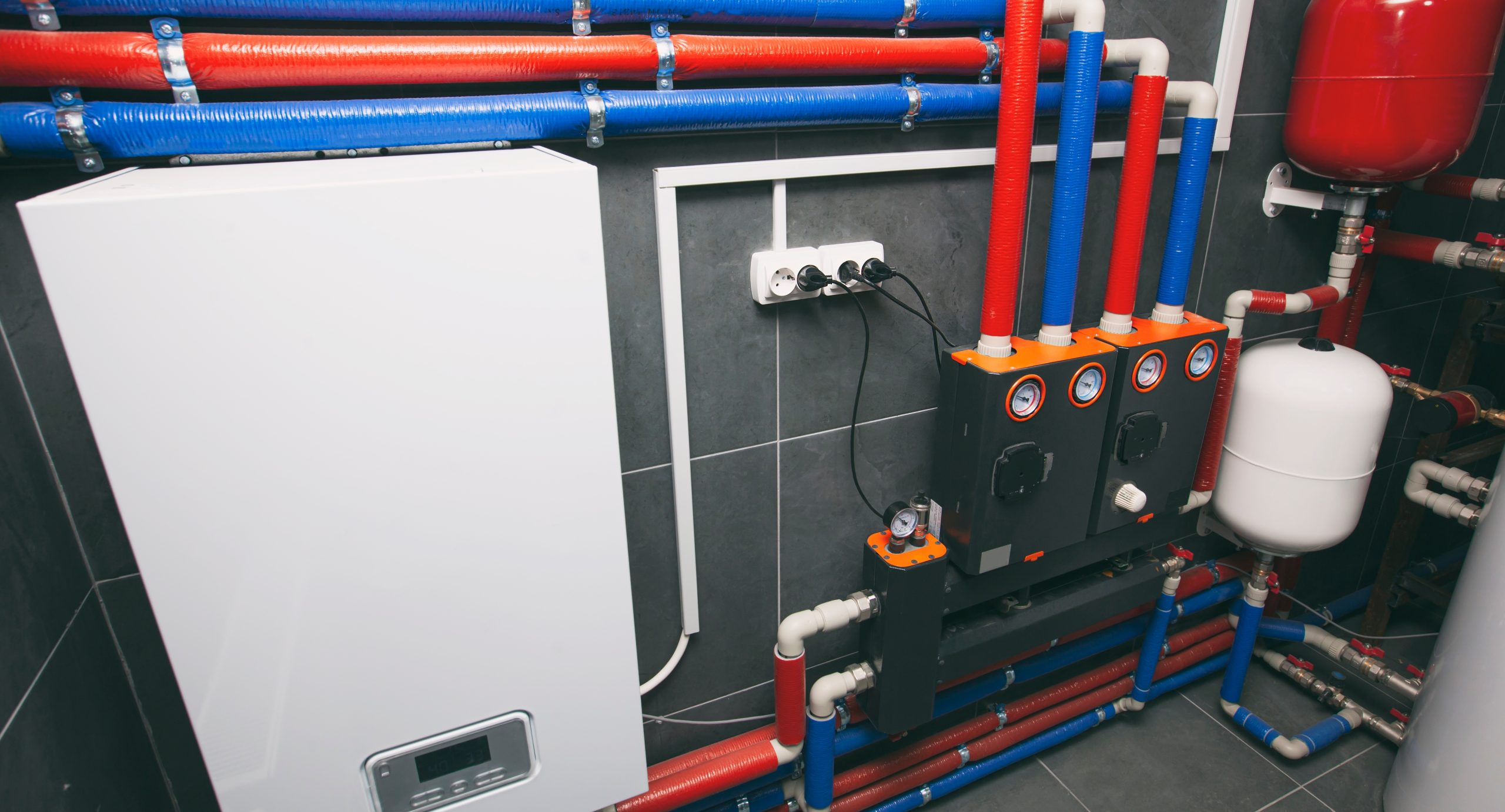
A custom boiler panel is engineered from scratch around the specific demands of one system. That means the component selection, pipe sizing, valve arrangement, and control wiring all reflect the actual load calculations and spatial constraints of the project rather than a catalogue assumption about what most jobs need.
The difference shows up immediately in the details. A custom panel can accommodate a primary-secondary loop configuration for a large commercial building, include multiple heat exchangers for mixed-temperature zones, or integrate a buffer tank into the assembly in a way that fits a tight mechanical room. None of that flexibility exists in a shelf-ready unit.
Controls are another area where customization matters. Building automation tie-ins, outdoor reset curves calibrated to a specific building envelope, and sequencing logic for multiple boilers all require programming that reflects your system, not a generic template. Our hydronic heating design process starts with those variables before a single component is specified.
Pre-Built vs. Custom: Knowing Where the Line Is
Pre-built boiler panels are a smart choice for many projects. They ship fast, cost less upfront, and cover the most common residential and light-commercial configurations well. If your system falls within standard flow rates, standard temperatures, and a mechanical room with enough clearance, a pre-built panel will perform exactly as expected.
The line gets crossed when the system stops being standard. High-capacity commercial boilers, mixed radiant and fan-coil zones, domestic hot water integration, and anything requiring CSA or AHJ-specific documentation for an Edmonton permit submission can all push a project outside what a pre-built unit handles cleanly.
Similarly, pre-built pump boards solve a lot of zoning problems efficiently, but they have fixed pump positions and wiring layouts. When a project needs pump redundancy, variable-speed drives, or a non-standard number of zones, a custom assembly is the cleaner path. Forcing a system into a pre-built format just to save time on procurement usually creates more work during commissioning.
Common Edmonton Applications That Need a Custom Panel
Edmonton’s climate drives a specific set of hydronic heating demands. Long, cold winters mean systems run hard for months at a time, and a panel that is undersized or poorly matched to the load will show that weakness quickly. The city also has a large stock of commercial and industrial buildings where mechanical systems were installed in phases, creating integration challenges that only a purpose-built panel can address.
Some of the most common applications we see that benefit from custom boiler panels include large multi-family residential buildings with individual suite metering, warehouse and industrial facilities with overhead unit heaters on high-temperature loops alongside in-slab radiant in office areas, and retrofit projects where the new boiler plant has to talk to an existing building automation system.
Snow-melt systems are another frequent driver. A properly sized snow-melt loop for a commercial driveway or loading dock has glycol concentration requirements, flow rates, and control sequences that rarely match a pre-built panel’s assumptions. Getting those parameters right at the panel level prevents glycol degradation and uneven melt coverage. You can see how we approach similar complexity in our post on custom boiler panels in Calgary.
How a Custom Boiler Panel Is Designed and Built
The process starts with load data, not with components. We review the heat loss calculations, the zone layout, the boiler selection, and any constraints imposed by the mechanical room before we draw a single piping schematic. That sequence matters because component choices flow from system requirements, not the other way around.
Once the design is confirmed, fabrication happens in a controlled shop environment. Pipes are cut, fitted, and welded or pressed to the schematic. Pumps, valves, expansion tanks, and air separators are mounted to a steel frame sized for the specific panel footprint. Every connection point is pressure-tested before the panel ships to site.
Controls are wired and labeled to the project’s documentation package, which includes wiring diagrams, sequence of operations, and startup checklists. That documentation is especially important for Edmonton projects that require permit sign-off, because the inspector needs to verify that the panel matches what was submitted. A custom panel built with that process in mind makes inspections straightforward rather than complicated. You can also review examples of our finished work in our gallery.
Work With Evolve Hydronics on Your Next Panel
If your Edmonton project involves anything outside a standard residential or light-commercial configuration, it is worth having a direct conversation about whether a custom boiler panel is the right call. We design and build custom panels for hydronic systems of all sizes, and we are happy to review your drawings and load data to give you an honest answer. Reach out through our contact page or read more about our approach on the about us page. The earlier we are involved in the design, the better the outcome for everyone on the project.
Frequently Asked Questions
How long does it take to build a custom boiler panel?
Lead times typically range from two to six weeks depending on system complexity and component availability. Simple single-boiler panels with standard controls sit at the shorter end of that range. Large commercial assemblies with custom controls, multiple pumps, and specialty valves take longer. We confirm the timeline at the design stage so it fits your project schedule.
Are custom boiler panels more expensive than pre-built ones?
Yes, custom panels cost more upfront than pre-built options. The design time, custom fabrication, and project-specific documentation add to the initial price. However, a panel that is engineered for your exact system avoids the field modifications, extended commissioning hours, and performance compromises that come with forcing a pre-built panel into a job it was not designed for. Total installed cost is often comparable, and ongoing performance is better.
Can a custom boiler panel meet Edmonton permit requirements?
Yes, and it is one of the main reasons to choose a custom panel for commercial projects. We produce a full documentation package with wiring diagrams, piping schematics, pressure test records, and a sequence of operations. That package is prepared with the permit submission in mind, which simplifies the inspection process and reduces the chance of holdups on site.
What information do you need to design a custom panel?
We need the heat loss calculations or design load for each zone, the boiler model and output rating, the number and type of zones, the mechanical room dimensions, and any control integration requirements such as a building automation system or remote monitoring. If you have partial drawings, we can work with those and flag what is missing early in the process.
Do you build custom panels for both residential and commercial projects?
Yes, we work across both sectors. Residential applications that benefit from a custom panel include larger homes with multiple radiant zones, domestic hot water priority systems, and properties with snow-melt circuits. Commercial applications range from multi-unit residential buildings to industrial facilities with mixed-temperature distribution. The design process is the same in both cases: system requirements first, then components.
How does a custom boiler panel compare to what is available in Vancouver or Calgary?
The core design and fabrication process is consistent regardless of location. Climate and code requirements vary by city, so panels built for Edmonton are specified to handle Alberta’s heating season and meet Alberta-specific permit standards. If you are comparing approaches across markets, our posts on boiler panels in Vancouver and custom boiler panels in Calgary cover how those projects differ from Edmonton builds.


